Included
- Surface, site, and airspace assessment
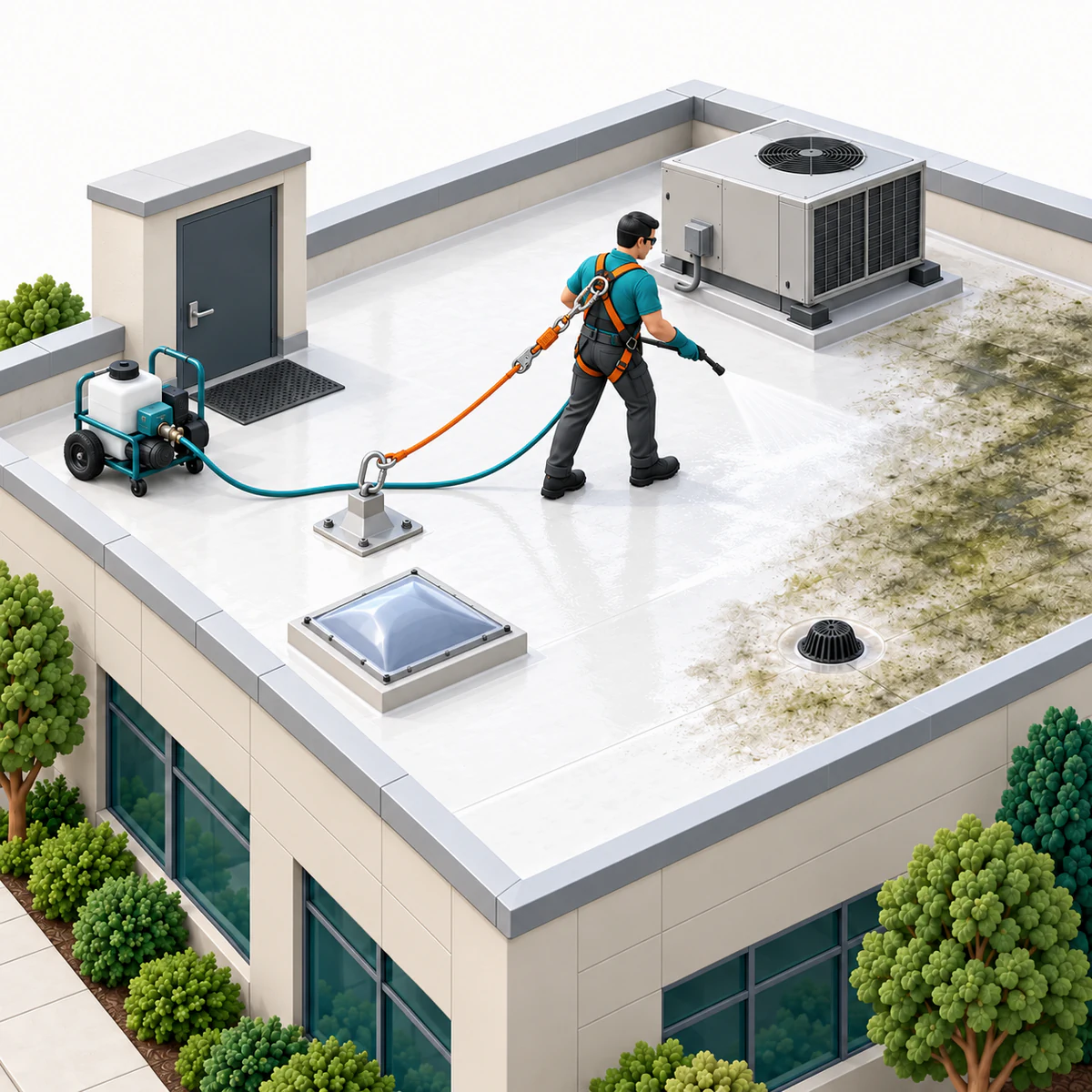
- Pilot, equipment, and weather check
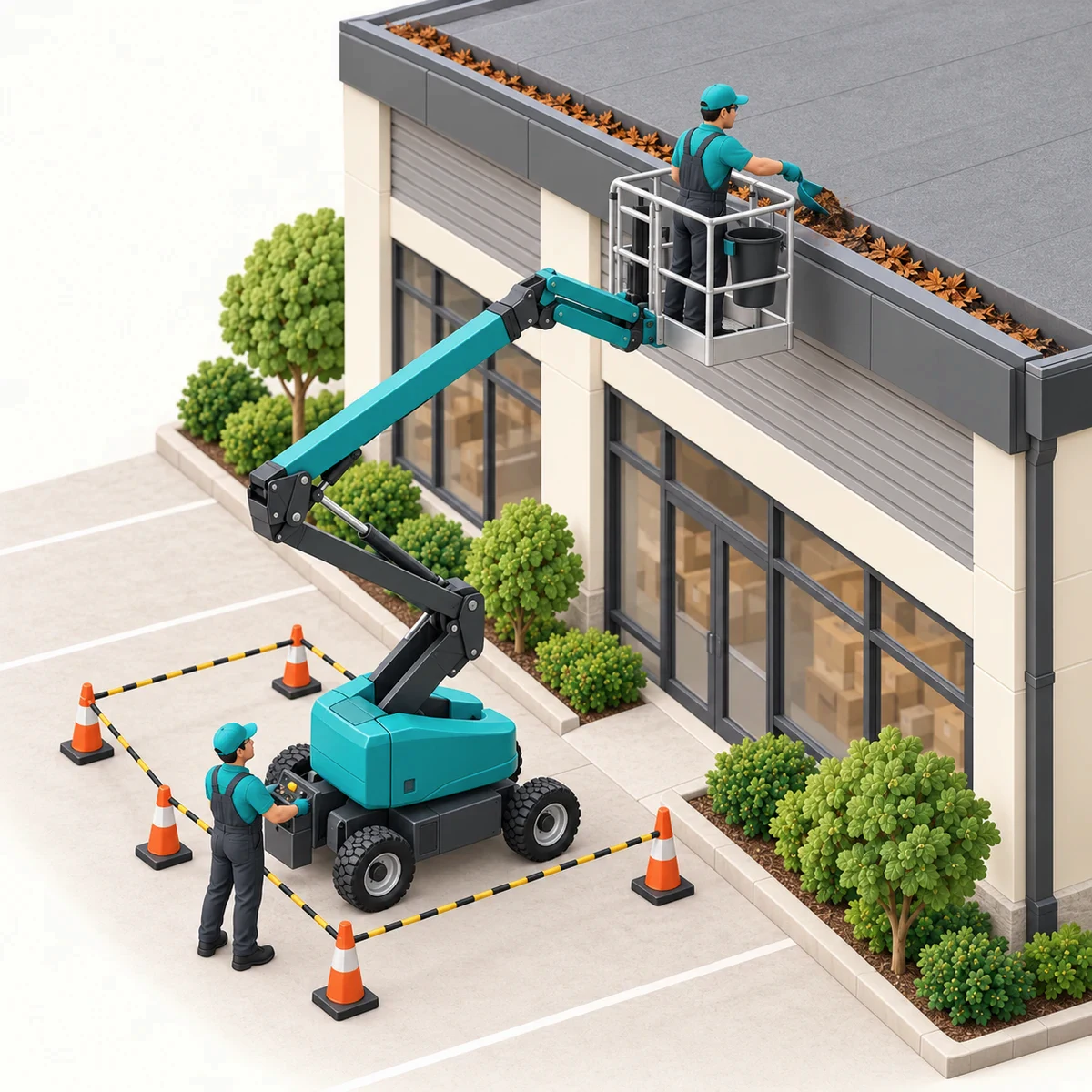
- Ground exclusion zone and hose control
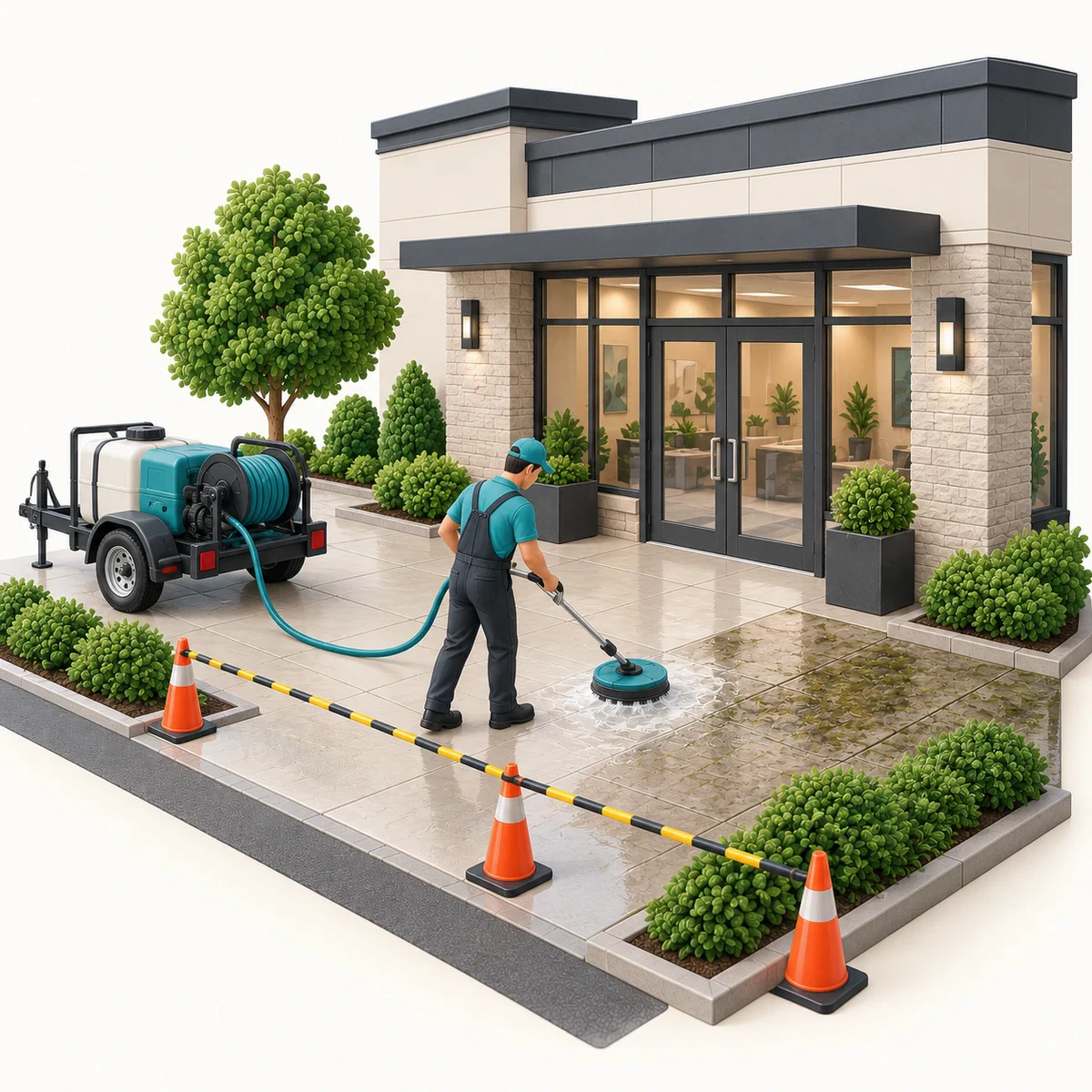
- The test area and cleaning scope in the quote
Commercial drone cleaning
Drone cleaning for suitable commercial façades, exterior glass, roofs, and open industrial gutters.
On suitable buildings, drone cleaning can reduce work at height, avoid lift or scaffold setup, and shorten disruption around the property. Reduced access-equipment needs may also lower the cost. A ground crew still runs the system, and each benefit depends on the site and surface. Compare drone cleaning with conventional crews.
Illustrative example · CAD before tax · Not a quote. Site assessment required.
Job size means conventional crew cleaning hours, excluding setup and cleanup. Access is an example equipment choice, not a recommendation based on height. Compare the same surfaces and finish.
Calendar days, including delays. The minimum covers the conventional job at 8 hours per working day; add days for weekends or delays. Rental uses the cheapest covering day/week/month blocks, assuming 7-day weeks and 28-day months. Confirm supplier terms, operating-hour limits and reach.
Starting crews are 2 people each. Drone setup starts at an illustrative 45 minutes. All hourly costs are planning allowances, not wages or Turn Clean prices.
Drone equipment cost = monthly budget ÷ monthly use × job hours, including setup, cleanup and extra finishing. Include the drone, support rig, maintenance and insurance in that budget. Other costs cover transport, water, chemicals, work-zone controls and fees outside the amounts already included. Count each cost once. Finishing here assumes the drone crew can complete it without another access rental; otherwise request an assessment.
Conventional: 9.5 h on site. Drone-assisted: 5.25 h on site.
Drone what-if scenarios: $1,095–$1,815 as cleaning time varies from half to the same time. This is not a predicted price range.
Confirm access, airspace, weather, work-zone controls and required finish. Lower cost does not establish suitability.
45-foot lift: $450/day, $1,350/week, $2,850/month. 60-foot lift: $595/day, $1,570/week, $3,355/month. Published rates checked October 8, 2026; delivery, fuel, waiver and tax are extra.
A manufacturer-published water-tower trial reported 2.5 hours for the drone versus 5 hours for a lift crew on opposite halves. Half-time is an illustrative scenario, not a universal façade or window rate. Sherpa’s manufacturer describes a pilot plus ground support. Two-person crews and 45-minute drone setup are editable planning examples, not staffing requirements or guaranteed setup times. Your equipment, site and finish may differ. The three-quarter and same-time options are sensitivity assumptions.
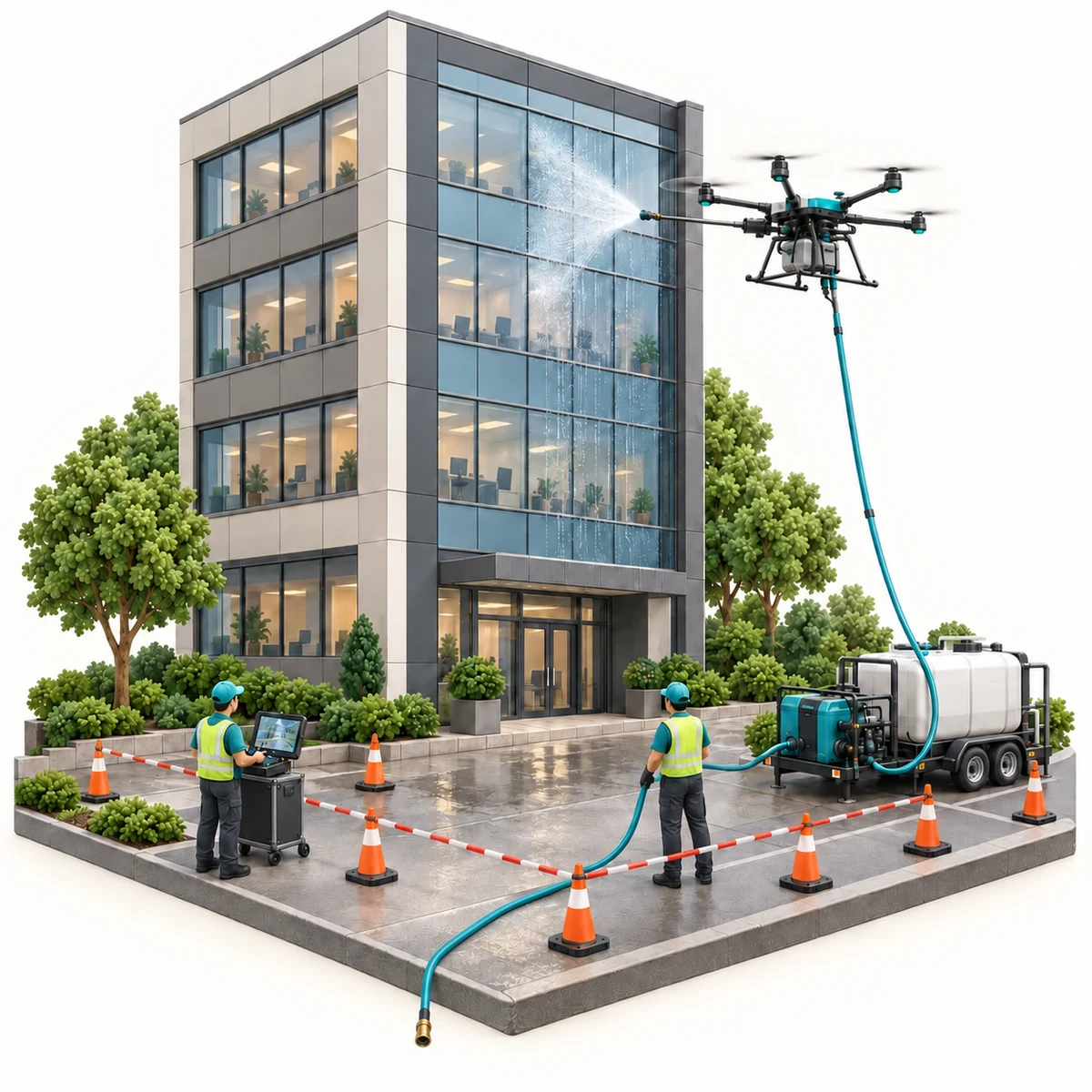
We check the surface, building, airspace, weather, drains, and public areas.
We confirm the pilot, equipment, permissions, hose route, and exclusion zone.
We test a small area, complete the approved work, and review the result.
We set the work and price before booking. An on-site check may be needed.
It can be when reduced lift, scaffold, or rope-access setup outweighs the drone setup and operating costs. It is not always cheaper. The site assessment and any manual finishing determine the quoted price.
No. Each job depends on the surface, height, airspace, weather, access, runoff, and people nearby.
No. The standard system is touchless. Bonded dirt, hard-water marks, paint, or damaged glass may need manual work.
Roofs and open commercial gutters may qualify. Roof material, gutter shape, debris, and downspout access decide the method.
For commercial properties in Metro Vancouver and the Okanagan, the main advantages are reduced work at height and less access-equipment setup. The assessment determines whether those advantages apply to your building.
A pilot operates the hose-fed drone from the ground. For the approved washing scope, this can reduce the time cleaners spend on ladders, lifts, scaffolds, or ropes. It does not remove every risk: flight, hoses, spray, and people nearby still need controls. Manual finishing may still require access equipment.
On an open façade that can be cleaned by spray, a drone may avoid the need to erect scaffolding or repeatedly reposition a lift. This can shorten setup and washing time across large exterior areas. Pumps, hoses, water supply, flight planning, and a controlled ground work zone are still required. Wind, obstacles, and airspace restrictions can delay or rule out a flight.
Avoiding scaffolding or lift placement can reduce the space occupied by access equipment near entrances, landscaping, and parking. The work zone still needs to keep people clear of the drone, hoses, and spray. Entrances or parking may need temporary closures, and noise and runoff must be planned for.
If a drone replaces lift rental, scaffold installation, or extensive rope-access setup for the quoted scope, access costs may be lower. Savings depend on the building, required permissions, cleaning method, and manual finishing. A small or easy-to-reach job may cost less with conventional tools. Compare quotes for the same area, finish, and cleanup requirements.
Drone washing changes how water and cleaning solution reach the surface. It does not make every stain easier to remove. Brushes, scrapers, and squeegees may be needed for bonded dirt, hard-water deposits, detailed edges, or restoration. Ground-based poles can suit accessible glass; lifts or rope access can suit hands-on work. A test area helps establish whether drone washing, conventional cleaning, or a combination fits the job.
For hands-on work, compare our commercial window cleaning and commercial exterior cleaning options. Send the building address, surface details, and photos when requesting an assessment.
Flight planning follows the applicable Transport Canada drone rules.
Provide the property address and requested work.
Get $25 off your next clean when a new client you refer books their first clean.